The Psychophysiological Impact of Soundscape Exposure on Human Happy Hormones
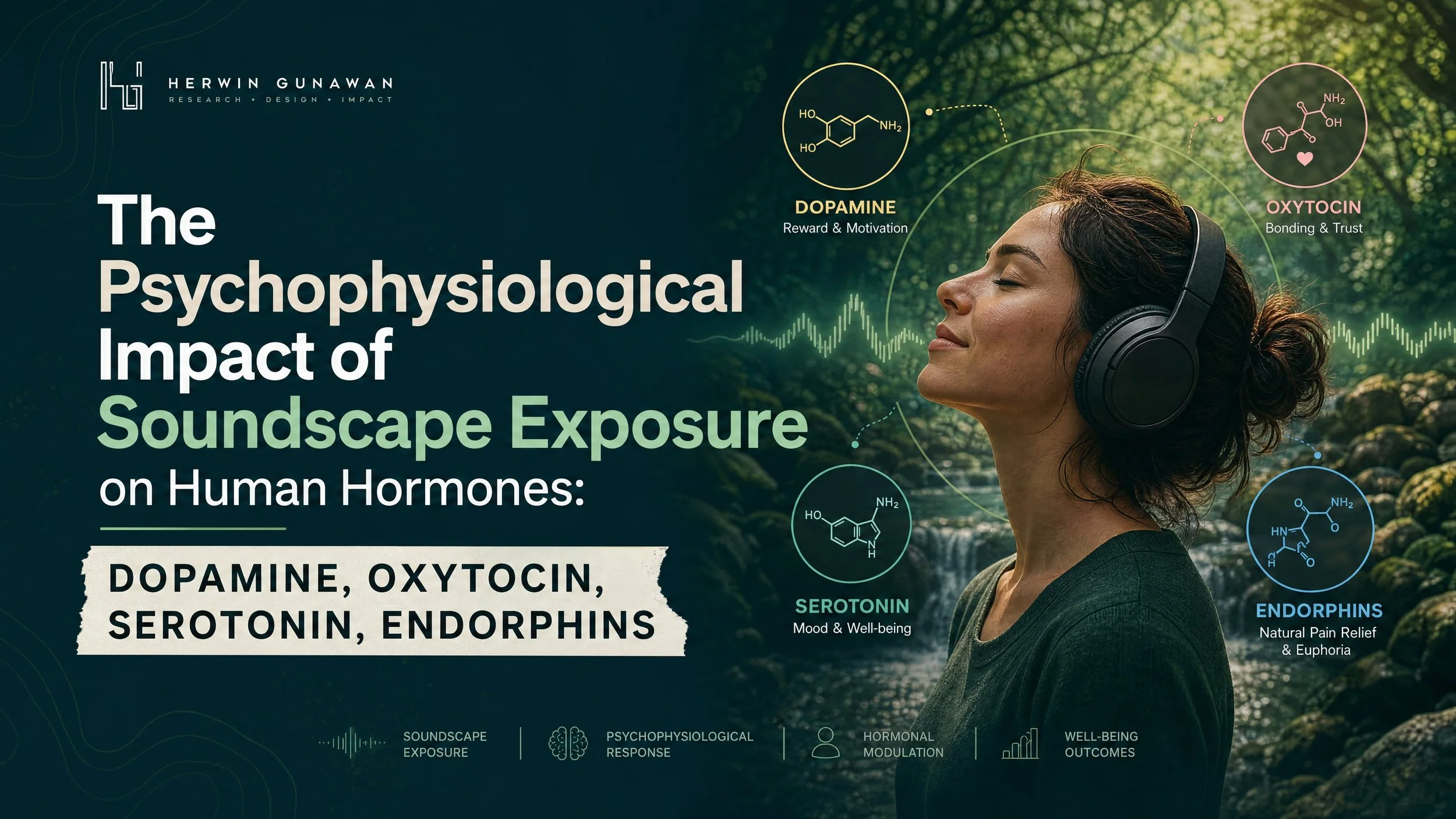
In contemporary architecture and urban development, environmental quality is often measured through visual aesthetics, thermal comfort, lighting performance, and indoor air quality. However, one critical sensory dimension is frequently underestimated despite its profound influence on human wellbeing: sound.
Traditionally, acoustic design has focused on controlling unwanted noise and meeting technical compliance standards. Yet emerging interdisciplinary research in neuroscience, environmental psychology, psychoacoustics, and human-centric design reveals that sound environments influence far more than auditory comfort. Soundscape exposure can directly affect emotional states, cognitive performance, stress response, social behavior, and even neurochemical regulation within the human body.
This growing field of research introduces a transformative perspective for architects, engineers, urban designers, and wellness consultants: the built environment does not merely shape how spaces look, but also how people physiologically and psychologically feel.
Understanding Soundscape Beyond Noise
The term “soundscape” refers to the acoustic environment as perceived and experienced by people within a specific context. Unlike traditional noise control, which primarily evaluates sound pressure levels and decibel reduction, soundscape design considers human perception, emotional interpretation, cultural meaning, and biological response.
Not all sounds are inherently negative. In fact, certain sound environments may contribute positively to psychological restoration and emotional well-being.
Examples include:
flowing water
birdsong
rustling leaves
moderate social ambience
soft music
acoustically balanced interior environments.
Conversely, poorly designed auditory environments such as excessive traffic noise, mechanical hum, uncontrolled reverberation, or chaotic urban sound may increase stress, fatigue, irritation, and cognitive overload.
The distinction lies not only in sound intensity, but in how humans perceive and emotionally process auditory information.
The Auditory System and Human Hormones
Unlike vision, which can be voluntarily closed, the auditory sensory system continuously processes environmental stimuli, even during sleep. Sound signals travel rapidly through the auditory cortex and limbic system, influencing areas of the brain associated with emotion, memory, attention, and autonomic nervous system regulation.
This psychophysiological relationship explains why certain environments instantly feel calming, energizing, restorative, or stressful. Research indicates that positive soundscape exposure may influence several important neurochemicals associated with emotional regulation and human well-being.
Sound influences hormonal and neurochemical activity via complex neural pathways. Auditory signals ascend from the ear through brainstem to auditory cortex and limbic regions (amygdala, hippocampus), engaging the hypothalamus and reward circuits. These pathways modulate the hypothalamic–pituitary–adrenal (HPA) axis (stress hormones), the mesolimbic dopamine system (pleasure), oxytocin and endogenous opioid systems (social bonding, analgesia), and the autonomic nervous system (vagal tone).
Recent studies show that listening to music and natural sounds can alter biomarkers: for example, pleasurable music elicits striatal dopamine release, slow-tempo music raises oxytocin and heart-rate variability (parasympathetic tone) while fast music lowers cortisol, and “happy” (major-key) music reduces cortisol more than “sad” (minor-key) music. Active, preferred music typically produces stronger effects than passive or mismatched sounds.
Clinically, music therapy and therapeutic soundscapes in hospitals, workplaces or urban design have been shown to reduce stress, anxiety, pain and even influence immune markers. For example, perioperative music lowers cortisol and preserves NK-cell counts, and live music therapy can markedly dampen sympathetic tone in palliative care. Based on the evidence, design guidelines emphasize slow tempos, consonant harmony, inclusion of natural sound elements, and user choice to maximize beneficial hormone responses.
However, many studies are small or heterogeneous, and long-term hormonal effects are under-studied. Key research gaps include standardized protocols, individual differences (expectancy/placebo), and mapping exact neural-hormonal mechanisms. This report surveys the neural mechanisms (auditory cortex → limbic/hypothalamus → endocrine), summarizes human/animal evidence (music vs. noise, biomarkers), and gives practical soundscape design recommendations with citations to recent primary studies and reviews.
Dopamine and Motivational Sound Environments
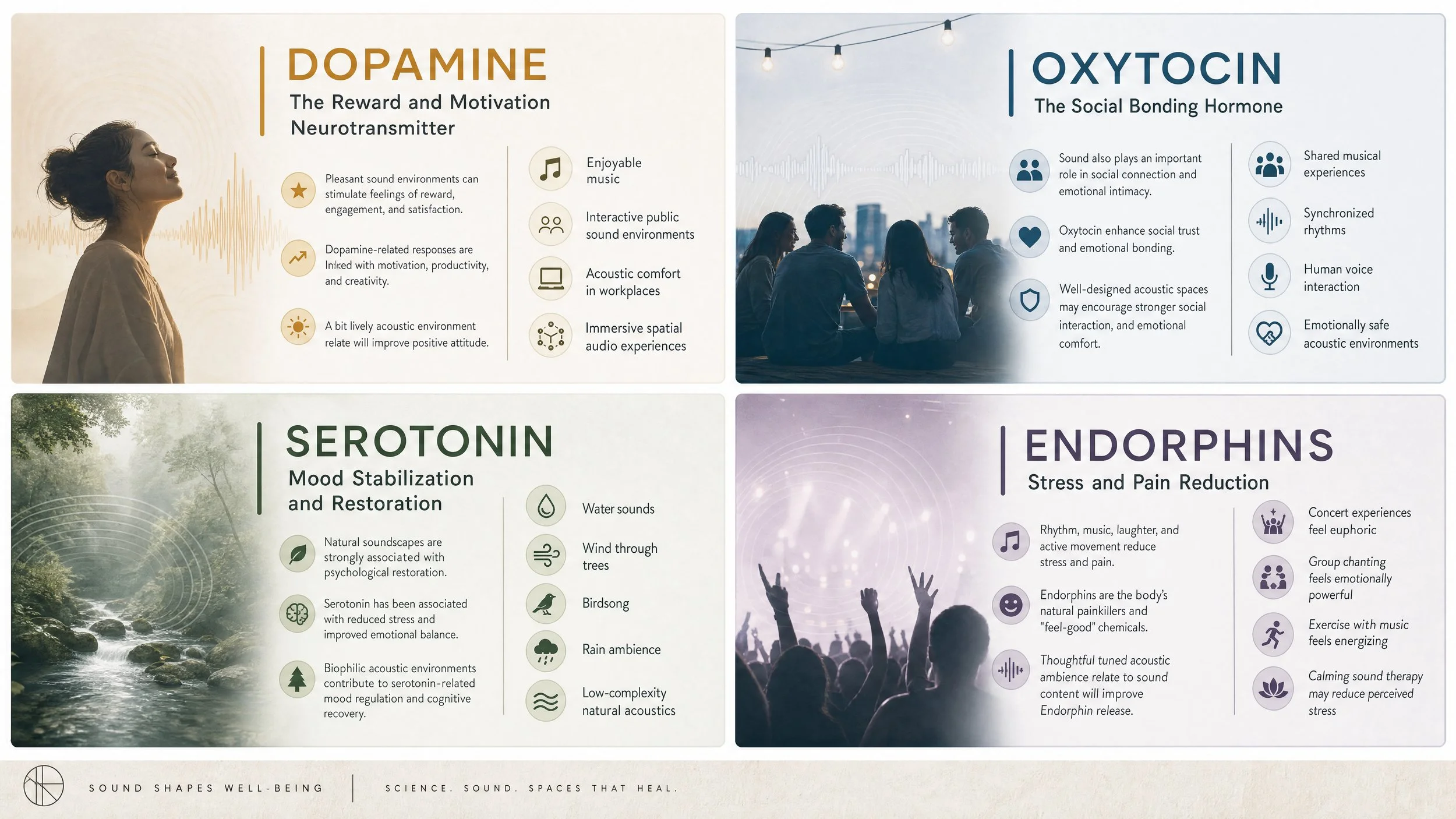
Dopamine is often associated with motivation, reward, engagement, and anticipation. Pleasant and stimulating sound environments may encourage dopamine-related responses that support productivity, creativity, and positive emotional states.
Examples include:
enjoyable music,
immersive spatial audio experiences,
lively but comfortable café ambience,
and acoustically optimized collaborative workplaces.
Moderately dynamic sound environments can create psychological stimulation without causing stress overload. In workplace design, this balance may contribute to higher engagement, improved concentration, and enhanced user experience.
For commercial and hospitality environments, carefully curated auditory atmospheres can also influence emotional perception and customer behavior.
Oxytocin and Social Acoustic Interaction
Oxytocin is commonly referred to as the “bonding hormone” because of its role in social trust, emotional connection, and interpersonal comfort.
Sound plays a significant role in human social interaction. Shared musical experiences, synchronized rhythms, clear speech communication, and emotionally safe acoustic environments can encourage stronger social engagement and collective emotional response.
Examples include:
concert experiences
communal worship spaces
collaborative work environments
educational settings
acoustically comfortable public spaces
Poor speech intelligibility and excessive reverberation often reduce communication quality and increase cognitive fatigue. In contrast, well-designed acoustic environments can strengthen inclusivity, social participation, and emotional comfort.
This is particularly relevant in healthcare, hospitality, workplace, and educational design where human interaction becomes a critical component of well-being.
Serotonin, Restoration, and Biophilic Soundscape
Natural soundscapes are strongly associated with psychological restoration and stress recovery. Exposure to water sounds, wind through trees, rainfall ambience, and birdsong has been linked to improved emotional balance and reduced mental fatigue.
These restorative qualities align closely with biophilic design principles, which seek to reconnect humans with natural systems and sensory experiences.
Biophilic acoustic environments may support serotonin-related mood stabilization by:
reducing stress perception
improving relaxation
supporting cognitive recovery
enhancing perceived environmental quality
In urban environments increasingly dominated by mechanical noise and digital overstimulation, integrating natural sound elements may become an important strategy for improving mental wellness and environmental satisfaction.
Endorphins and Positive Emotional Activation
Endorphins are natural neurochemicals associated with pleasure, stress reduction, and pain relief. Rhythm, music, movement, and emotionally engaging auditory experiences may stimulate endorphin release and improve emotional resilience.
Examples include:
live music events,
rhythmic group activities,
exercise accompanied by music,
and calming sound therapy environments.
This explains why certain acoustic experiences feel emotionally uplifting, immersive, and physically energizing.
In wellness-oriented architecture, thoughtfully designed sound environments can therefore contribute to both emotional comfort and physiological relaxation.
Sound Types and Listening Context
Studies highlight that the characteristics of sound critically shape hormonal outcomes:
Tempo and Energy: Slow, low-arousal music promotes parasympathetic responses and relaxation. Ooishi et al. (2017) found slow-tempo music increased oxytocin and vagal tone, whereas fast-tempo (upbeat) music was linked to cortisol suppression and higher arousal. Similarly, Sharma et al. (2021) reported that music with gradual tempo variations induced calmer brainwaves and lower anxiety than monotonous music.
Harmony and Mode: Consonance and “happy” modes yield stronger stress relief. Suda et al. (2008) showed major-key music reduced cortisol more than minor-key. Pleasant, familiar harmonies tend to engage reward circuits more fully. In contrast, dissonant or jarring sounds (e.g. random noise, heavy metal) can elevate stress hormones. Sound interventions using consonant intervals and simple structures (e.g. ambient piano) generally have more soothing effects.
Sound Source – Natural vs Mechanical: Nature soundscapes (birds, rain, running water) often produce beneficial effects. For example, adding water/forest sounds to hospital environments has been associated with lower stress measures (blood pressure, cortisol) than noisy urban sounds. In Uğraş et al. (2018), even passive nature sounds alongside music significantly lowered diastolic BP. By contrast, continuous mechanical or white noise yields little benefit: Sokhadze (2007) found that both pleasant and sad music aided stress recovery after a negative task, whereas white noise did not improve physiological recovery.
Volume/Intensity: Moderate volume is key. Too-soft music may not engage the brain effectively, whereas loud noise (above ~85–90 dB) is recognized as a stressor that triggers HPA activation. Many studies therefore use comfortable listening levels (around 60–70 dB). In practice, maintaining sound levels that do not startle or fatigue listeners is recommended to avoid cortisol spikes.
Exposure Duration and Timing: Both the length and timing of exposure matter. Short sessions (5–30 min) are often sufficient to see immediate hormone shifts, but effects may be transient. Chu & Tsai (2026) note that short-term music interventions reliably raised oxytocin, whereas long-term therapy (weeks of music sessions) did not change baseline oxytocin. This suggests most hormonal responses reflect acute changes rather than lasting endocrine reprogramming. Repeated or continuous exposures might lead to habituation if not varied. Some studies (e.g. Tang et al., 2009) show short-term BP reductions with both relaxing audio and music that dissipate over months, indicating primarily transient relief.
Active vs. Passive Listening: Engagement and choice amplify effects. When participants actively select or attend to the music, hormonal changes are generally larger than under passive or background conditions. Leardi et al. (2007) found that patients choosing their own music during surgery had greater cortisol reductions than those given standard “new age” music. Similarly, Singh et al. (2009) reported that hospitalized patients who listened to self-selected music experienced larger drops in anxiety and breathing rate than those doing guided relaxation. Attending to music (vs ignoring it) engages limbic reward and emotional circuits more fully. Thus preferred and personally meaningful music yields stronger neuroendocrine effects. Active engagement (e.g. singing, dancing) further boosts endorphins and oxytocin compared to passive listening.
Contextual Factors: The listener’s context and emotional state modulate outcomes. For instance, music during a stressful procedure can offset anxiety, whereas the same music might simply energize a listener at rest. Some studies (Lunde et al., 2022) even show that expectancy (belief in benefit) partly determines music’s effect on pain. In general, matching the music style and timing to the situation (e.g. calming music for stress-reduction, upbeat music for motivation) enhances beneficial hormone responses.
Design Applications
Music Therapy: Clinicians exploit these effects to improve health outcomes. Music therapy – structured interventions by certified therapists – is used in hospitals, clinics and community settings to reduce stress and pain. Systematic reviews report that music therapy significantly reduces anxiety, depression, and pain in patients with cancer, dementia, and undergoing surgery. For example, Leiardi et al. (2007) showed that perioperative music lowered patient cortisol and preserved immune NK-cells. In pain management, music can reduce opioid use: a review notes that music-based interventions diminish the need for pain medication, likely via endogenous endorphin and dopamine mechanisms. In rehabilitation (stroke, Parkinson’s), rhythmic auditory cues have improved motor recovery, potentially through dopamine release.
Healthcare Soundscape Design: Beyond therapy sessions, hospital and clinic soundscapes are being redesigned for health. Soothing ambient music and nature sounds in waiting rooms or patient rooms have been associated with lower stress and better patient satisfaction. For instance, playing gentle classical or nature sounds in dental or ophthalmology waiting areas has been shown to reduce patient anxiety and blood pressure. Conversely, noisy hospital environments (alarms, machinery) elevate cortisol and impede healing. Hospital designers now recommend “quiet hours”, noise-reducing materials, and curated calming soundtracks to promote recovery. Although direct citations in this report are limited, the same physiological principles apply: built environments that minimize intrusive noise and incorporate pleasant natural audio cues can attenuate HPA-axis activation and enhance comfort.
Workplace and Urban Planning: The insights extend to workplaces and cities. In offices or open-plan environments, well-chosen background music or sound masking (e.g. low-level natural sounds) can reduce stress and improve focus, whereas disruptive noise (traffic, construction) raises cortisol and fatigue. Urban planners use “soundscape” design by preserving quiet natural areas, incorporating green space with bird habitat, and installing water features that produce calming sounds. Studies have found that access to natural soundscapes (parks with bird songs, streams) correlates with lower stress biomarkers in residents. Noise mitigation (sound barriers on highways, regulations on nightlife noise) similarly prevents chronic stress responses. While controlled studies in real-world settings are fewer, the laboratory evidence on how sound modulates hormones provides a strong rationale for these applications.
Implications for Human-Centric Environmental Design
The future of acoustic consultancy is evolving from simple noise mitigation toward human-centric soundscape design. This emerging approach integrates: acoustics, neuroscience, environmental psychology, architecture, urban ecology, wellness-centered development.
Future healthy buildings may intentionally optimize not only: architecture, interior, thermal comfort, lighting quality, air quality and energy efficiency but also auditory wellbeing and emotional restoration.
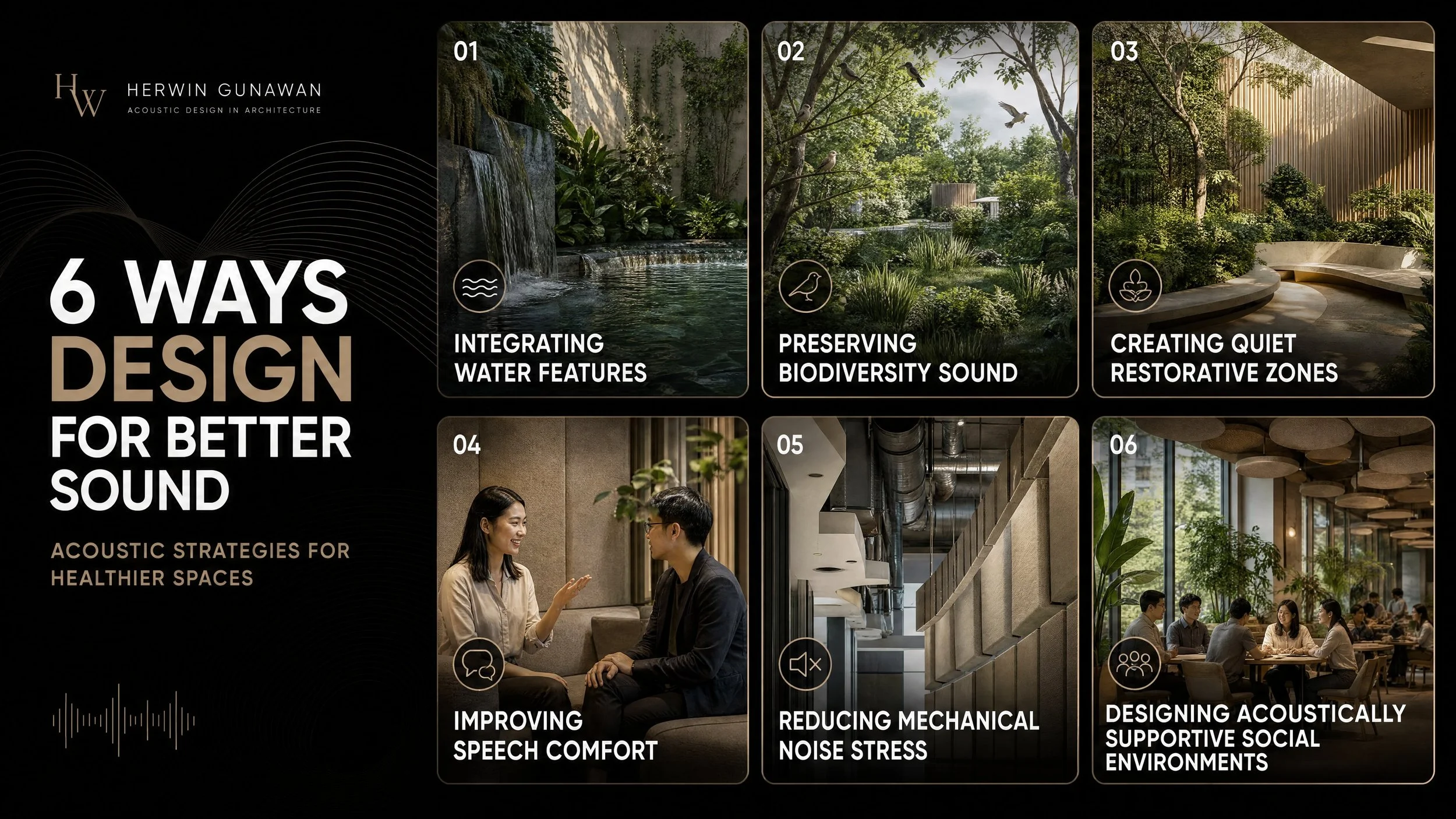
Potential strategies include:
integrating water features
preserving biodiversity sound
creating quiet restorative zones
improving speech comfort
reducing mechanical noise stress
designing acoustically supportive social environments
As cities become denser and more technologically complex, the quality of auditory experience may become one of the defining factors of healthy and emotionally sustainable environments.
Conclusion
Soundscape is no longer merely an acoustic background condition. It is a biological, emotional, and psychological component of human experience.
Emerging research suggests that auditory environments may influence hormonal balance, emotional regulation, cognitive performance, stress recovery, and social interaction. This understanding challenges architects, engineers, designers, and urban planners to rethink the role of sound within the built environment.
The future of healthy building design may depend not only on what people see, but also on what they hear — and how those sounds shape human well-being from both psychological and physiological perspectives.