AV Vendor vs AV System Integrator vs Audiovisual Consultant: What Is the Difference?
Modern buildings increasingly depend on audiovisual systems to support communication, collaboration, entertainment, education, hospitality, and operational performance. However, many project owners still misunderstand the difference between an AV Vendor, AV System Integrator, and Audiovisual Consultant.
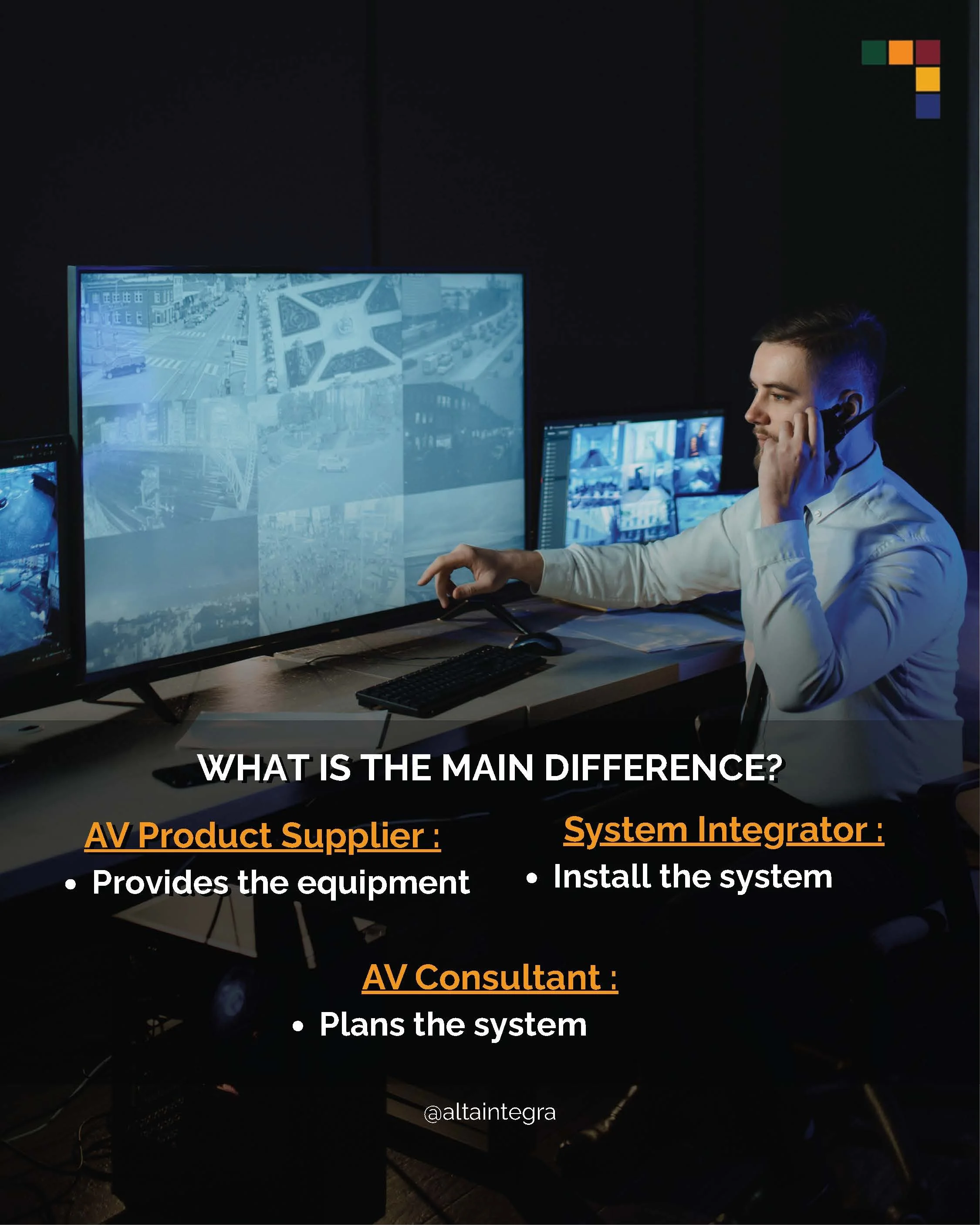
Understanding these differences is important because each role contributes differently to the success of a project. In premium architecture and high-performance buildings, choosing the right audiovisual approach can significantly affect: User Experience, Operational Efficiency, Building performance, Technology Scalability, Architectural Integration, Long-term project value.
What Is an Audiovisual Vendor?
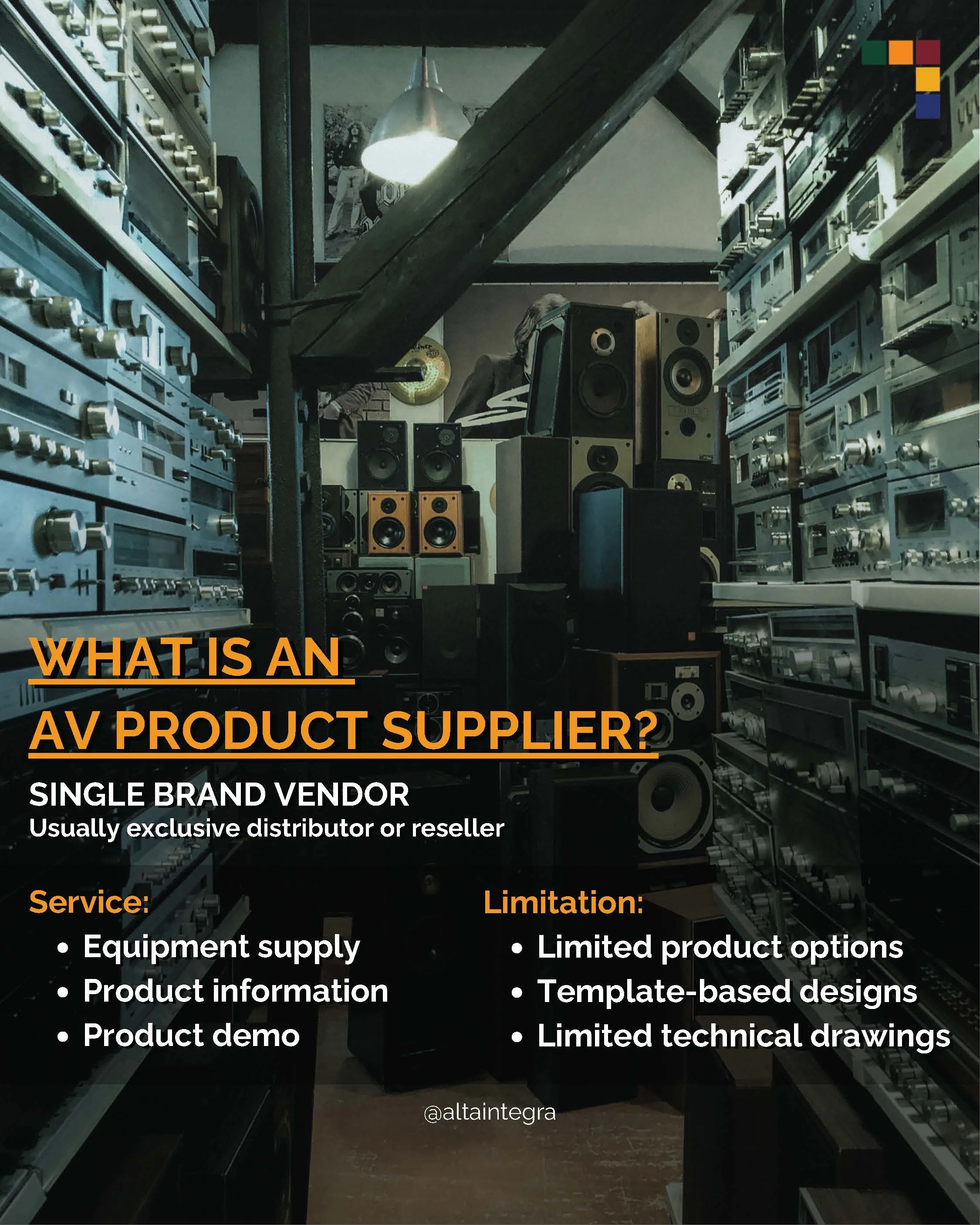
An Audiovisual Vendor is a company or supplier that primarily sells audiovisual products or equipment.
Their business usually focuses on:
Product distribution
Brand representation
Hardware sales
Equipment packages
Product recommendations
AV vendors typically begin the design process from the products they already sell or distribute.
Because of this, proposed solutions may be influenced by: available inventory, referred brands, existing supplier ecosystems and product availability.
AV vendors are important for procurement and equipment sourcing, but their role is generally product-oriented.
What Is an AV System Integrator?
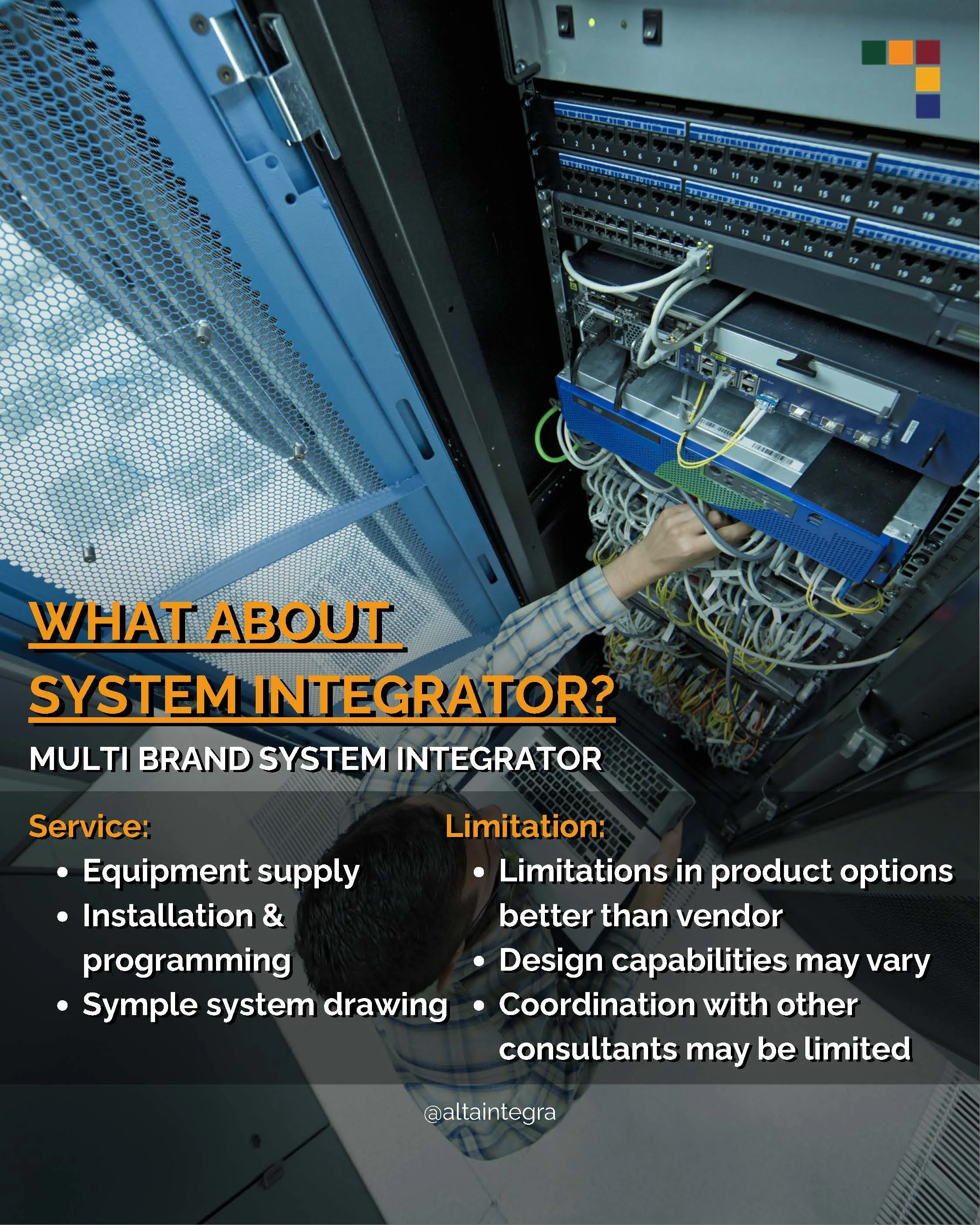
An AV System Integrator focuses on combining multiple technologies into a functional audiovisual system. Unlike vendors, AV integrators usually begin by understanding: client operational requirements, functional needs, room usage, technical compatibility and budget considerations.
After evaluating those requirements, the integrator selects and integrates products that can achieve the desired functions effectively.
Typical responsibilities include: system installation, equipment integration, programming and configuration, testing and commissioning, user training and technical troubleshooting.
AV system integrators are primarily function-oriented. Their goal is ensuring the system operates properly and meets functional expectations.
What Is an Audiovisual Consultant?
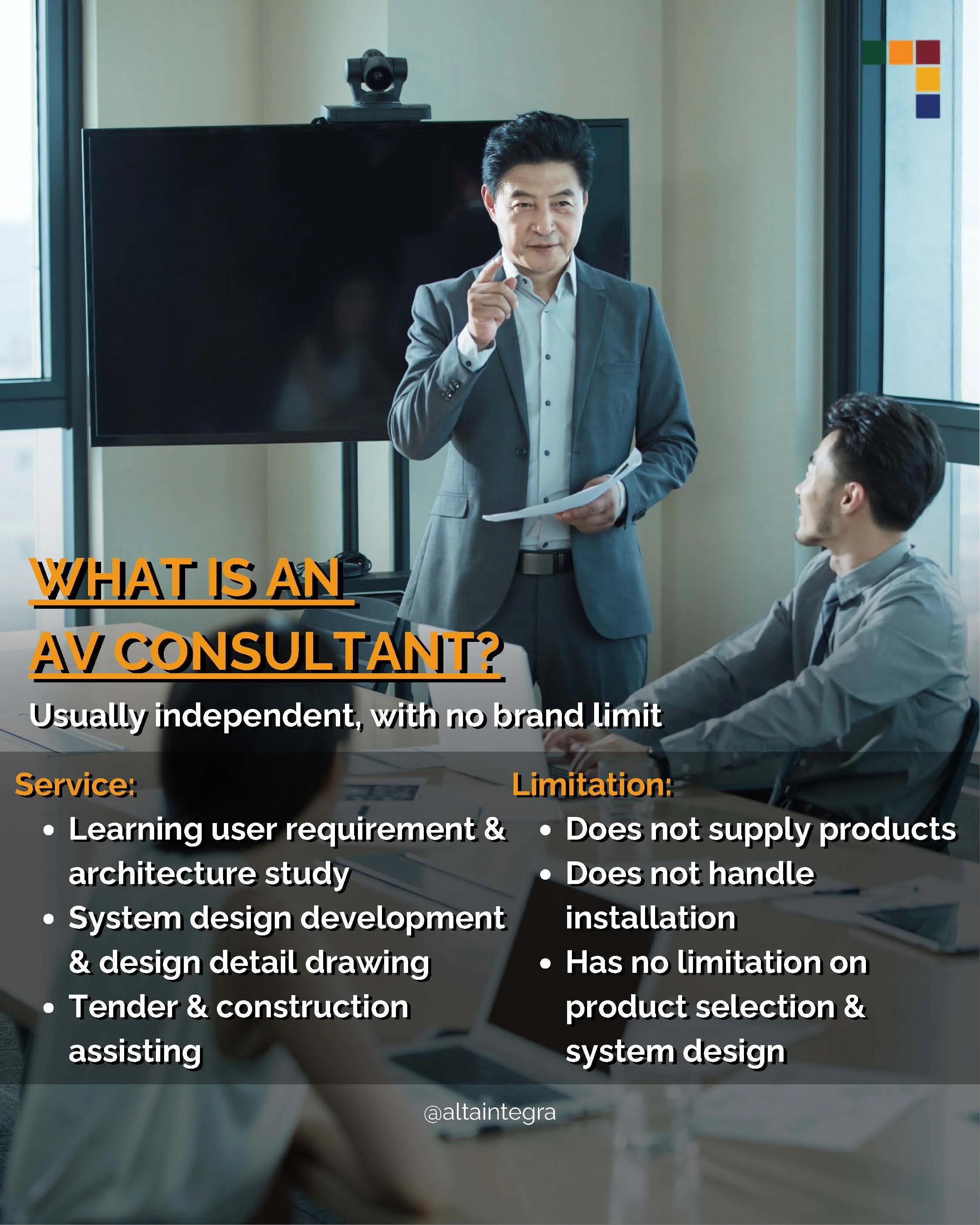
An Audiovisual Consultant works from a broader and more strategic perspective. Instead of starting from products or equipment, audiovisual consultants begin by analyzing: desired user experience, performance expectations, operational workflow, standard operating procedure, architectural and interior design conditions, acoustic and environmental considerations, building systems coordination, future scalability and long-term operational flexibility.
After understanding those factors, the audiovisual consultant develops: system concepts, performance strategies, technical design criteria, product-neutral recommendations, multiple product alternatives, tender documentation, construction drawings and coordination during tender and construction phases.
An audiovisual consultant acts as an independent advisor focused on aligning: Technology, Architecture, Environmental Performance, Human Sensory, Human Behavior and Operational needs into one cohesive system.
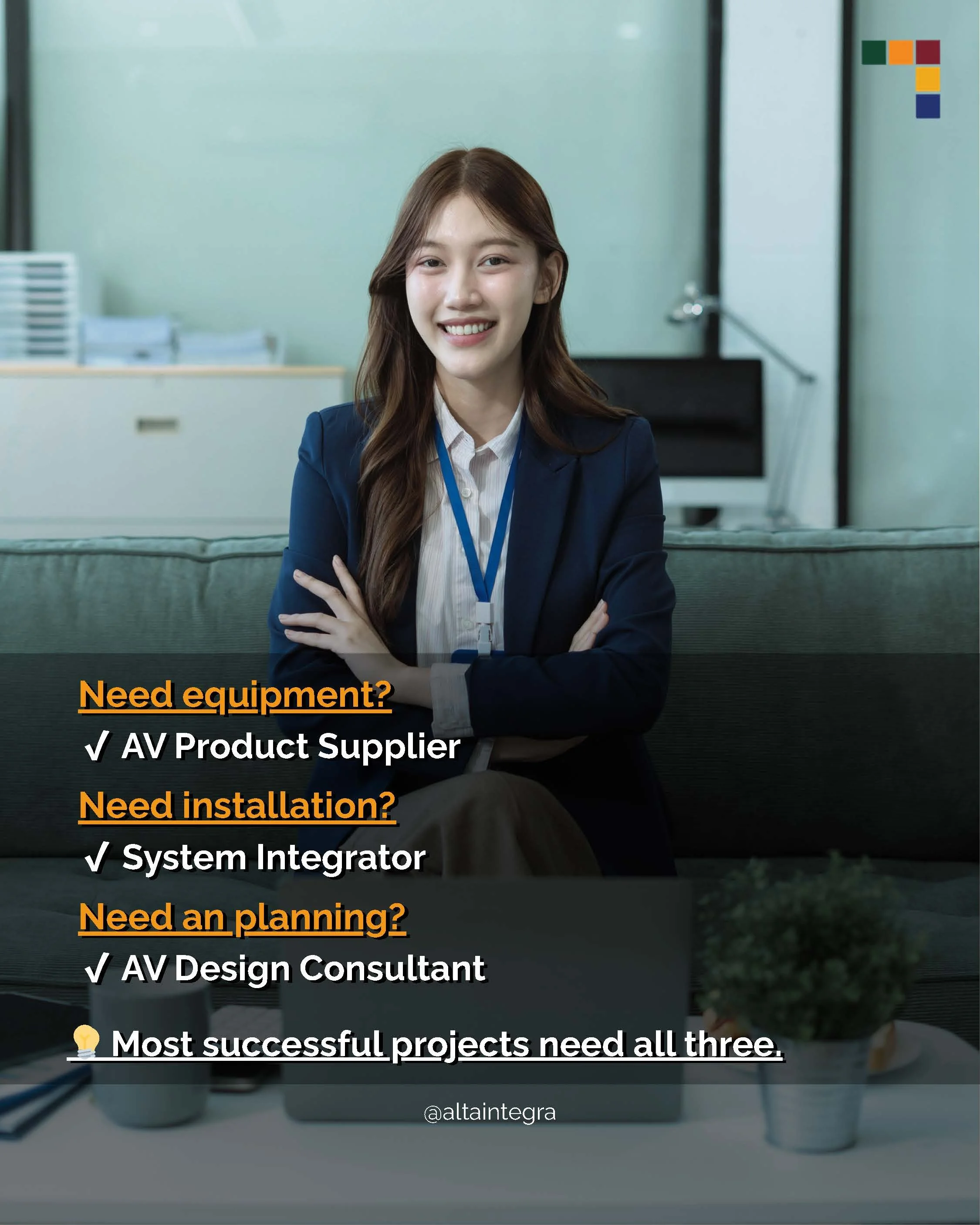
What Is the Main Difference Between Vendor, Integrator, and Consultant?
The differences can be summarized simply: AV Vendor Product-Oriented, AV System Integrator Function-Oriented, Audiovisual Consultant Performance & Experience-Oriented. Each role serves different project objectives and responsibilities.
Why Is Audiovisual Consultancy Important in Modern Buildings?
Modern architecture increasingly depends on integrated technology systems. Audiovisual systems now influence: Communication Quality, Workplace Collaboration, Hospitality Experience, Educational Effectiveness, Entertainment Environments, Hybrid Meeting Performance, User Interaction and Smart building Functionality.
Poor audiovisual planning can create: Operational Inefficiency, Poor User Experience, Architectural Conflicts, Acoustic Problems, Technology Redundancy, Difficult Maintenance, Future Scalability Limitations. This is why early audiovisual consultancy is becoming increasingly important in high-performance buildings.
When Should an Audiovisual Consultant Be Engaged?
The ideal time to engage an audiovisual consultant is during the early design stages. Early involvement helps: Improve coordination with architecture and MEP systems. Prevent costly redesigns and optimize user experience. Align AV systems with operational goals. Improve acoustic and environmental integration. Support long-term flexibility and scalability.
Projects that commonly require audiovisual consultants include:
Corporate headquarters
Hybrid workplaces
Auditoriums
Convention centers
Hospitality projects
Educational facilities
Houses of worship
Entertainment venues
Smart buildings
Mixed-use developments
How Does an Audiovisual Consultant Support Architects and Developers?
Our Audiovisual consultants help bridge the gap between technology and architecture. We work closely with: architects, interior designers, MEP engineers, lighting designer, acoustic consultants, IT consultants, operators, contractors and facility management teams.
The objective is ensuring audiovisual systems integrate naturally into the building without compromising: architectural aesthetics, spatial quality, user experience, operational efficiency and environmental performance. Good audiovisual design should feel intuitive, seamless, and human-centric.
Why Are Human-Centric AV Systems Becoming More Important?
As buildings become more experience-driven, audiovisual systems are increasingly part of:
Human-centric design
Smart building strategy
Environmental experience
Workplace wellbeing
Hybrid collaboration
Brand perception
The best AV systems are not necessarily the most expensive.
They are the systems that successfully align:
Technology
Human behavior
Operational workflow
Architectural intent
Long-term building performance
into one cohesive user experience.
Choosing the Right Audiovisual Approach
Selecting the right audiovisual partner depends on project goals.
If the priority is:
Equipment procurement → Vendor
Functional system installation → Integrator
Long-term performance strategy and experience integration → Audiovisual Consultant
For premium architecture and complex developments, many projects benefit from involving audiovisual consultants early to guide the overall system strategy before procurement and installation begin.
Audiovisual Consultancy by Herwin Gunawan – ALTA Integra
At Herwin Gunawan – ALTA Integra, audiovisual consultancy is approached as part of integrated human-centric building performance.
The focus is not only on equipment selection, but on creating audiovisual environments that support: communication clarity, workplace productivity, hospitality quality, architectural integration, acoustic, lighting, electrical coordination, user experience and long-term operational performance
Through multidisciplinary coordination between acoustics, architecture, lighting, and building technology, audiovisual systems can become a meaningful part of high-performance building environments.
Explore more: Audiovisual & Building Performance Consultancy